
New research connects resistance training, longevity
Study says optimal time is 90 to 120 minutes a week of resistance work

The following is informational and not intended as medical advice. Older adults should always consult with a physician before starting or changing a fitness/exercise routine.
Optimal fitness for older adults requires a mix of activities, including resistance training. A new study in a major British medical journal seeks to quantify just how much resistance work leads to longevity benefits – and it’s less than many people might think.
“Clocking up 90 to 120 weekly minutes of strength (resistance) training may be the sweet spot for lowering the risk of death,” according to a news release from the BMJ Group, which publishes the journal.
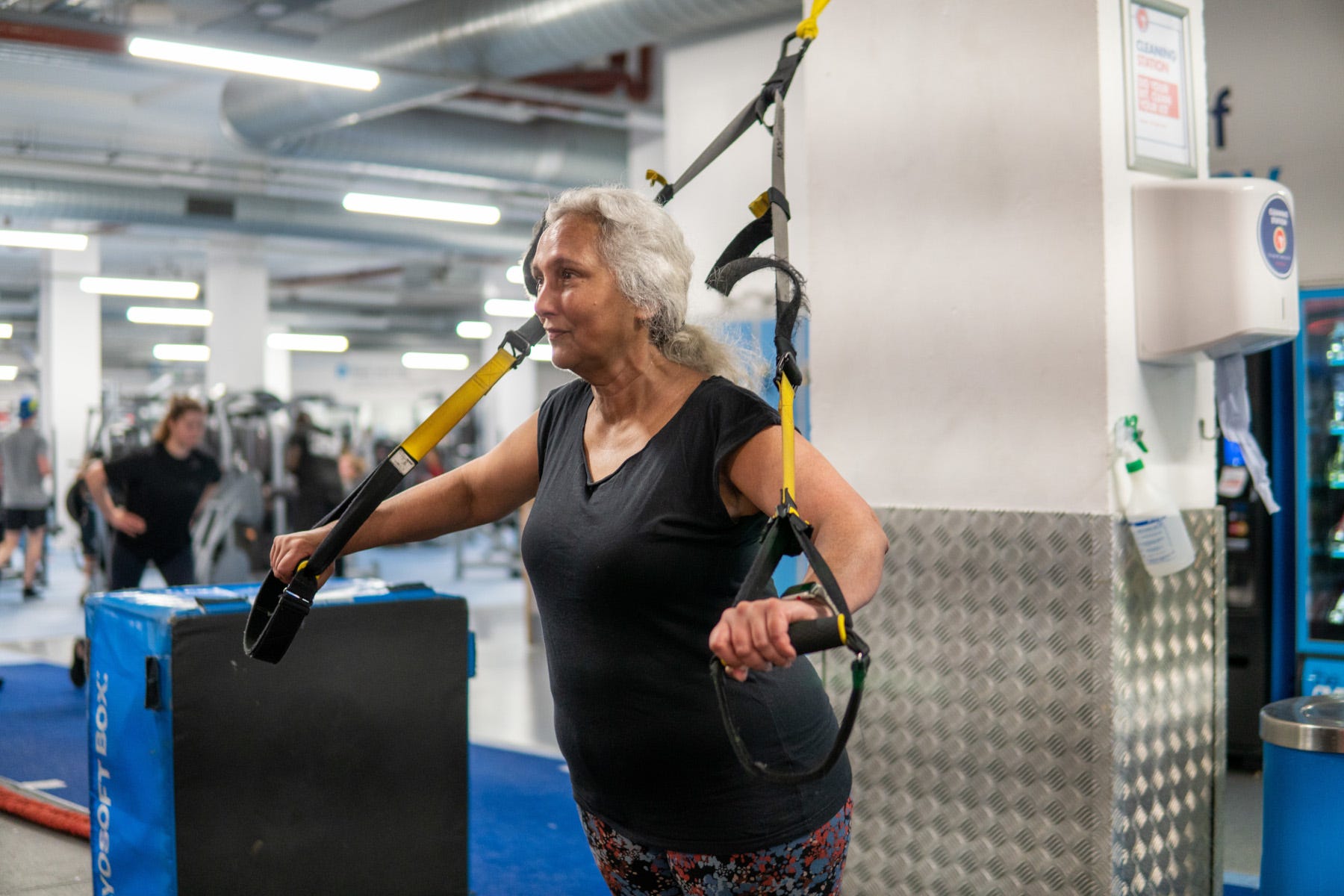
Researchers looked at data on 147,000 individuals spanning 30 years to determine an association between exercise levels and likelihood of death, based on the deaths of roughly a quarter of the original suspects during the study period. The data came from self-report questionnaires about resistance and aerobic physical activity administered every two to four years.
The study documented that doing between 90 and 120 minutes a week of resistance work was associated with a 13 percent lower risk of death from any cause, a 19 percent lower risk of dying from cardiovascular disease, and a 27 percent lower risk of dying from neurological disease such as Alzheimer’s. Other research also has found similar links between exercise and brain health.
The study also documented that it’s not necessary to spend excessive time with resistance training; people who spent more than 2 hours a week had no additional reduction in their risk of dying.
Combining resistance training and aerobic work was associated with even better results, up to a 45 percent lower risk of any cause of death than those who didn’t do either kind of training. Aerobic exercise included brisk walking, running, jogging, swimming, cycling, tennis, squash, strenuous outdoor work and stair climbing,
For purposes of the study, resistance training was not just with weights. It also included body weight exercises, such as press ups, squats, and lunges as well as weights. It’s worth noting that research has found weightlifting isn’t necessary for an effective resistance workout.
The researchers also were careful to report that “This is an observational study, and as such, no firm conclusions can be drawn about cause and effect.” But nonetheless it’s evidence that resistance exercise has a close relationship with healthy aging.
The study was published in the British Journal of Sports Medicine on June 2, 2026.
The detail that jumps out is that the neurological benefit came in ahead of the cardiovascular one, which makes me wonder whether part of the benefit comes from the coordination demand of steering a load through space, not only from stronger muscles.
The 27 percent drop in neurological disease risk is the number that stands out most. Most people think of resistance training purely for muscle or bone density, but the brain connection rarely gets mentioned with that kind of specificity.
The plateau after two hours is useful too, it takes away the guilt of not doing more once you've hit the sweet spot.
I do my own strength work a few times a week alongside pickleball, no creatine, just consistency, and this is a good reminder that the ceiling here is lower than people assume. Did the study break down whether bodyweight-only routines held up as well as weighted ones in that 90 to 120 minute range?