
Want to keep moving? Keep up those social ties
Research finds that social engagement encourages more physical activity by older adults

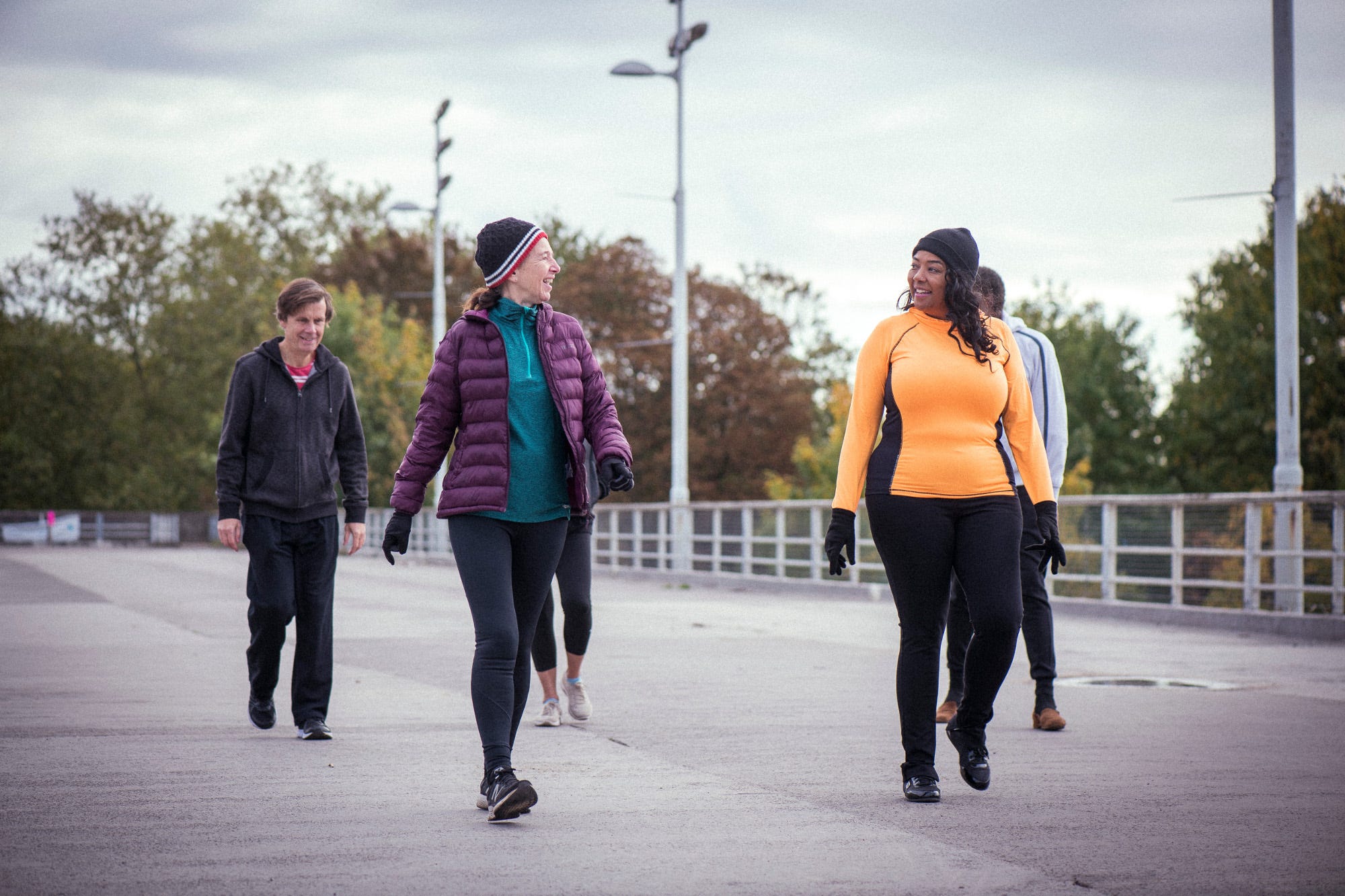
Some people are exercise “loners” while others are exercise “joiners.” For example, some like to run, walk or bike by themselves, while others join walking groups or bicycling clubs.
The joiners may be onto something. Recent research documents that social engagement can encourage older people to keep exercising more consistently.
The study by a research team from Texas A&M University’s School of Public Health was a meta-analysis that looked at about three dozen previously published pieces of research about the connections between being social and being physically active. The researchers said that what set their work apart is that while many of the earlier studies looked at one aspect of social connection, they sought to complete a “comprehensive review of many social factors.”
What they found was that across the different ways of defining or measuring social interaction, more of such engagement was consistently connected with more physical activity. As they put it:
“Specifically, factors such as expansive social networks, supportive family environments, social support, neighborhood communities regarding physical activity, and favorable social interactions were positively associated with physical activity among older adults.”
The converse also was true, they found: lack of social support, loneliness and isolation all were associated with lower levels of activity.
Although all types of socializing mattered, the largest amount of the research described how social support (e.g., from participants’ families, friends, and community members) and wider social networks were associated with greater physical activity.
This matters, the researchers said, because federal statistics show that in 2022 only 14 percent of adults 65 and older met CDC and WHO physical activity guidelines for both aerobic and muscle-strengthening activities. Encouragement of social interaction could in turn encourage more people to do more exercise to improve that number, they added, especially anything that improves social support and helps people develop more robust social networks.
Large bodies of previous research have indicated that exercise is crucial for healthy aging, and that social activity is important as well. Putting the two together makes for a powerful combination that can enhance healthy aging in multiple ways.